
Claude Code vs ChatGPT: Which One Actually Finishes the Financial Task?
Both tools can talk about a balance sheet. Only one of them tends to open the files, run the numbers and leave you something you can check. A plain-language look at how Claude Code and ChatGPT handle real financial work in 2026, and where each one still fails.
This article is general information and educational commentary only. It is not financial product advice, and it does not take into account your objectives, financial situation or needs. It is not a recommendation to buy, sell or hold any financial product, and it is not an endorsement of any tool named below. Financial markets carry risk, including the risk of losing money. Past performance is not a reliable indicator of future performance. Consider seeking advice from a licensed financial adviser, and read any product disclosure statement or target market determination before making a decision. In Australia, Moneysmart (moneysmart.gov.au) and ASIC (asic.gov.au) publish free, independent guidance.
Paramount AI Research is a publisher, not a licensed financial services provider. We do not hold an Australian Financial Services Licence, we do not provide personal advice, and we do not sell, arrange or deal in any financial product.
Two tools now dominate how people actually get financial work done with AI: Anthropic's Claude Code, which runs as an agent in a terminal and edits files directly, and ChatGPT, which answers in a chat window and can run code inside its own sandbox. They look similar from the outside and behave very differently once the task involves more than one file, one spreadsheet or one question. This review compares them on the work itself: multi-file code changes, spreadsheet reconciliation, long filing summaries and plain-English explanation.
How the Two Tools Actually Work
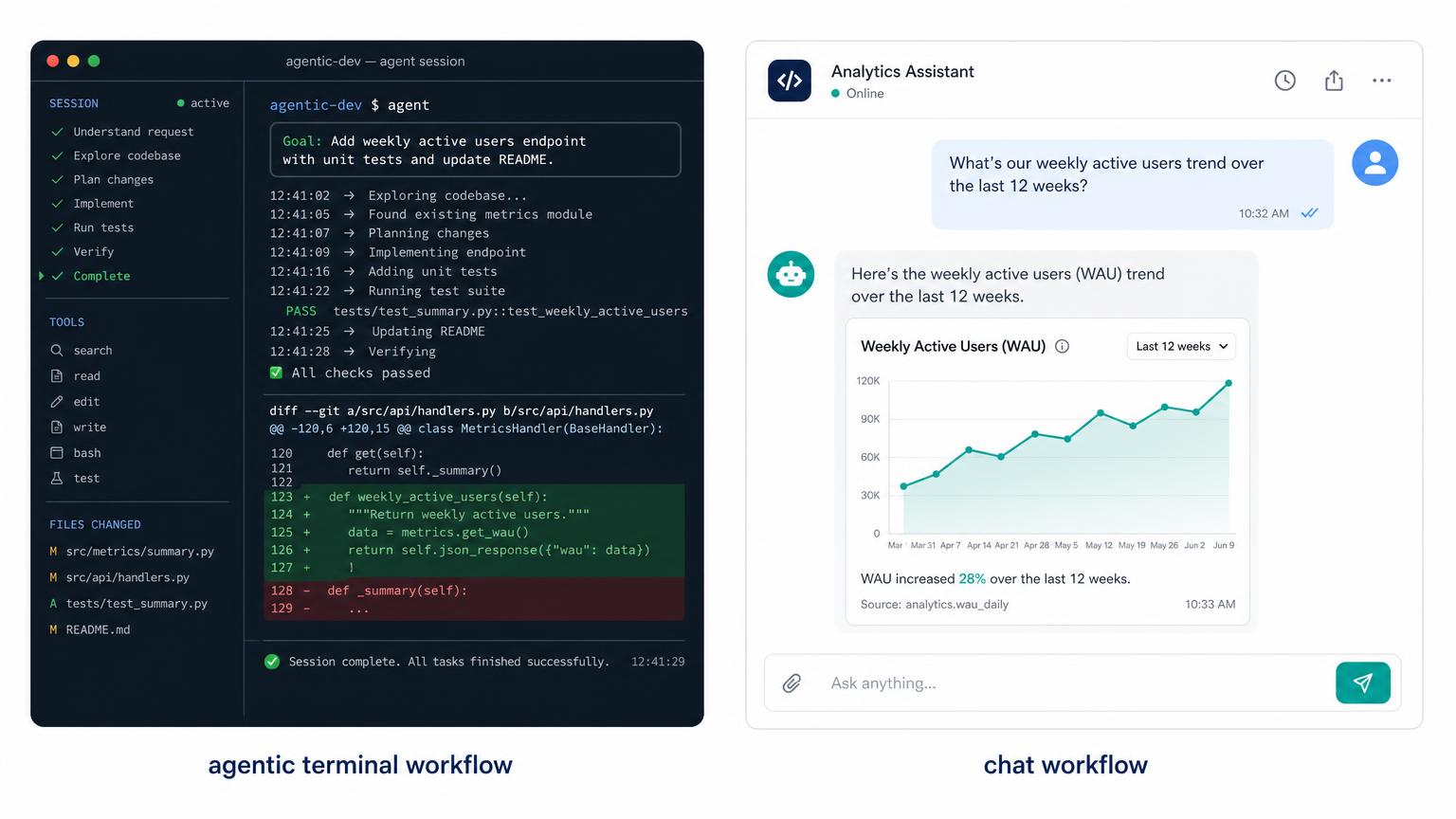
Claude Code takes a goal, explores the project or folder, plans, edits, runs its own checks and reports what it changed. Because every step lands as a file diff, the work is inspectable after the fact. ChatGPT takes a question, and where the task needs computation it writes and executes code in a temporary sandbox, returning the answer and usually the script behind it. That is fast for one-shot analysis and weaker when the task spans many files or several hours of state.
Task by Task
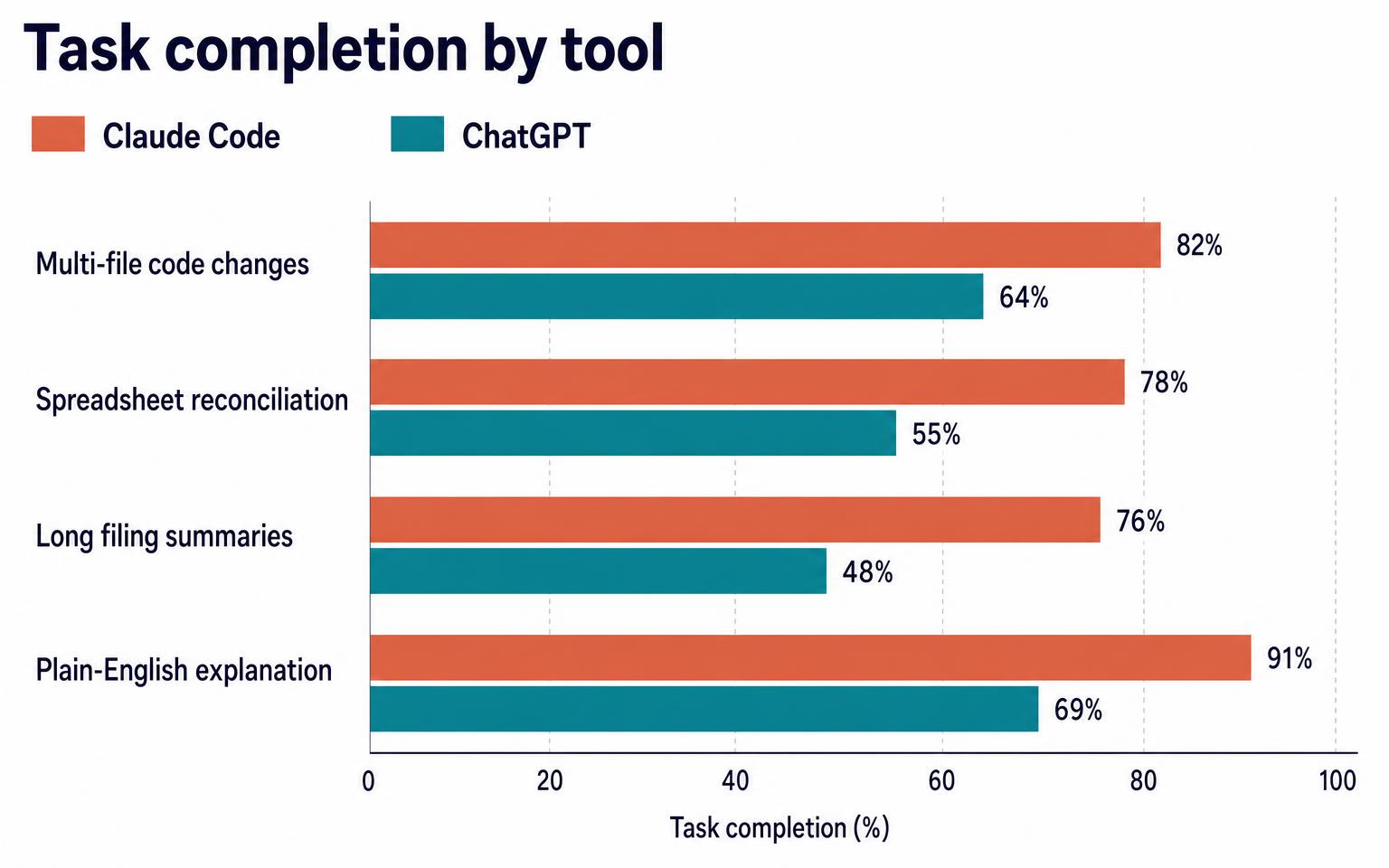
Multi-file code changes. This is Claude Code's home ground. Asked to add a new metric across a reporting codebase, it opens the relevant files, makes the change in each of them, runs the test suite and shows the diff. ChatGPT can produce equally good code, but it cannot see the rest of your project unless you paste it in, so the burden of stitching the change together stays with you. On tasks touching more than three or four files, that gap widens sharply.

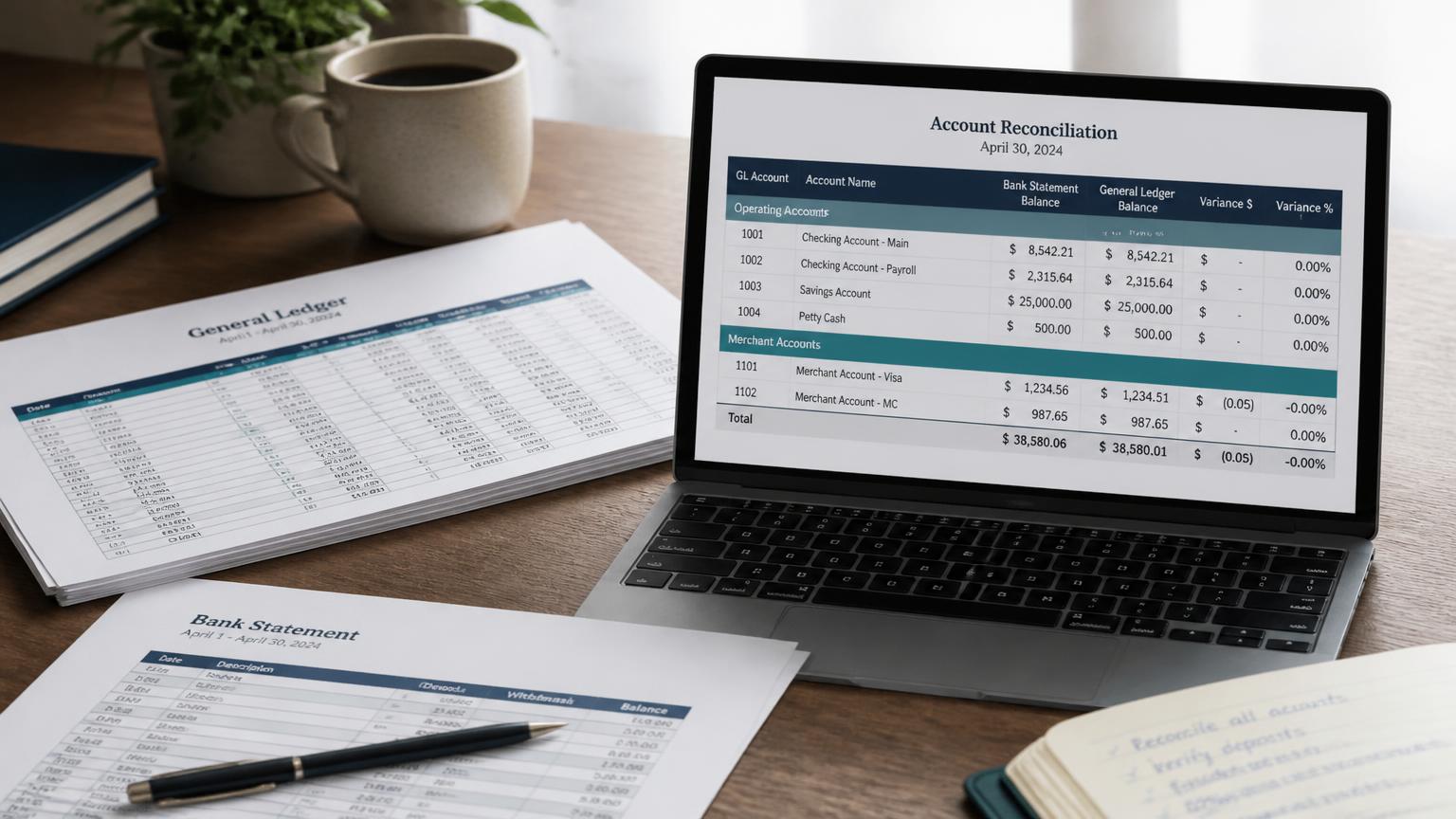
Spreadsheet reconciliation. Give both tools a messy ledger export where three columns mean the same thing. ChatGPT is quick and often right on a single file: it writes a script, runs it, and hands back a tidy answer. Claude Code tends to do better across a folder of exports, because it can iterate - reconcile, spot the mismatch, adjust the rule, re-run - without being re-briefed each time. Neither is safe to trust unchecked: a correct calculation on the wrong assumption is still wrong, and it arrives more confidently than before.
Long filing summaries. Both models will hold a full annual report in view rather than answering about the first few pages. Claude's long-context behaviour is the steadier of the two on dense disclosure documents, and Claude Code adds the useful habit of quoting the section it drew a figure from. The failure mode is shared and unchanged: a summary can be accurate in tone and still misplace which segment a number belonged to.

Plain-English explanation. ChatGPT is the more natural explainer for a general reader and remains the easier tool to hand to someone non-technical. Claude tends to be more cautious and more explicit about what it does not know. Fluency is exactly where confident errors hide, so the more readable answer is not automatically the more reliable one.
What the Benchmarks Do and Do Not Show
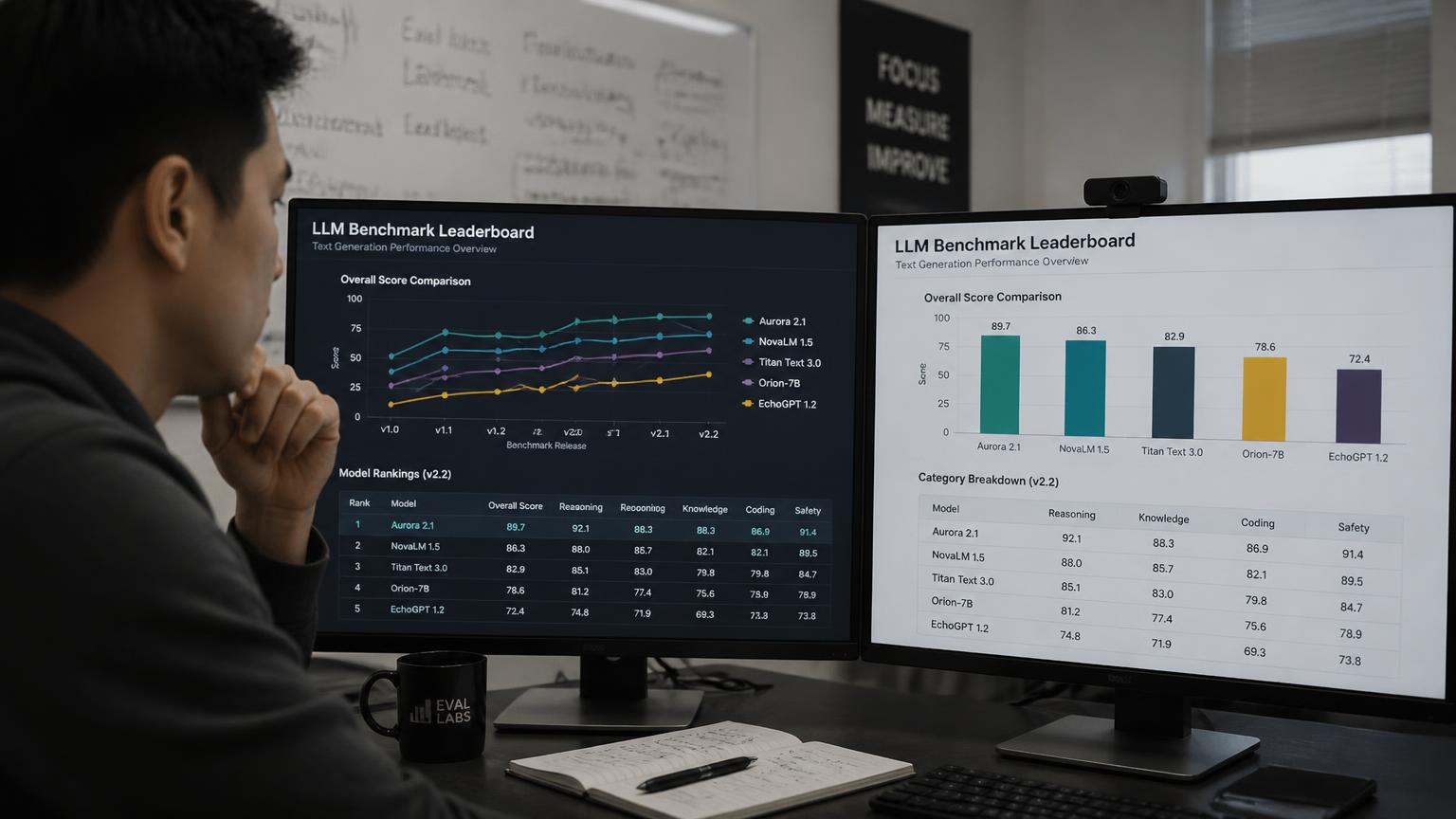
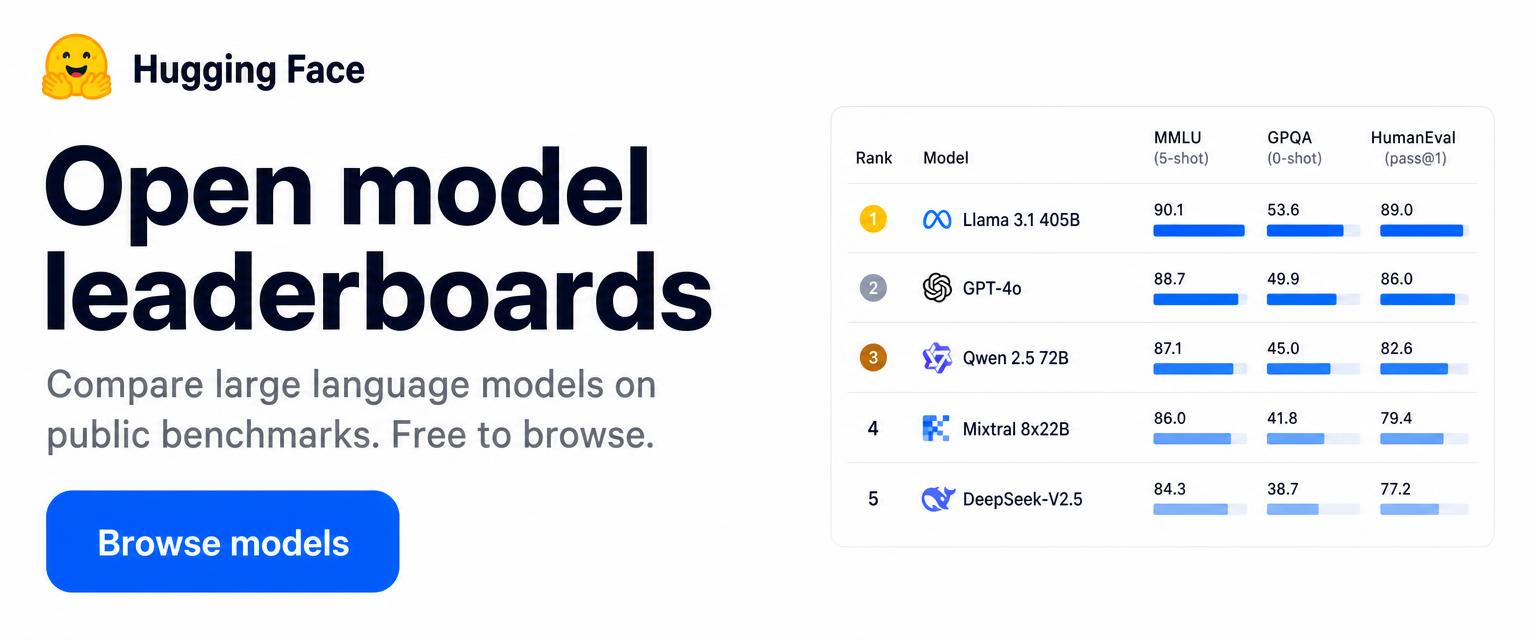
Public leaderboards are useful for direction and poor for decisions. Scores are usually reported on curated question sets, in a single attempt, without the messy context of a real workflow: a badly scanned PDF, an internal naming convention, a spreadsheet where three columns mean the same thing. Providers also tune for the tests that get quoted. A model that leads a financial-reasoning benchmark by two points is not measurably better at your work.
The more honest comparison is verification cost. How long does it take you to confirm the answer? A model that shows its data and its code is cheaper to check than one that produces a confident paragraph with no visible working - even if the paragraph scores higher.
The Limits Worth Naming
Stale or wrong data. Figures quoted from a model's memory may be out of date or simply invented. Prices, yields and fund fees should always be checked at the source, whatever the model claims about its training cut-off.
Fabricated citations. Every family still produces plausible references to documents, page numbers and clauses that do not exist. The larger the report, the harder this is to spot.
Overfitting. Any system that can test thousands of variations will eventually find one that looked brilliant in the past. That is a property of the search, not evidence of a good strategy.
Missing costs. Brokerage, spreads, currency conversion, franking and capital gains tax rarely appear in a quick simulation, and they are frequently the difference between a result on screen and a result in a real account.
No accountability. A licensed adviser has duties to you. A model provider does not. If an output is wrong, the loss is yours alone.
How Careful Users Work
The pattern among people who use these models sensibly is unglamorous. They use them for explanation, drafting, extraction and organisation rather than for conclusions. They run the same question through more than one model when it matters, and treat disagreement as a signal to check rather than a tie to break. They verify every number against a primary source - a fund's own disclosure documents, an exchange, a regulator. They keep a written record of why they did something, so a decision can be reviewed later. And they treat any output that sounds certain about the future with more suspicion, not less.
That is the honest summary of the 2026 landscape. The leaderboard positions will keep changing. These remain research and productivity tools, and the judgement, the responsibility and the risk remain entirely human.
Free, Independent Help
Moneysmart, run by ASIC, publishes free calculators and explainers on personal finance, fees and risk. ASIC Connect lets you check whether a person or company is licensed before you deal with them. The National Debt Helpline (1800 007 007) offers free, confidential financial counselling. None of these services charges a fee.
One email each week: how the leading models are performing on real financial work, written in plain English. Free, and you can unsubscribe at any time.
We never sell your details. Newsletter content is general information only, not financial advice.